For years, automotive retention strategies have focused on pricing, loyalty programmes, and customer satisfaction scores. While these matter, an increasingly clear pattern is emerging across industries, customers don’t drift away because they’re unhappy; they drift away because the relationship goes quiet. In dealerships and service centres, this silence usually happens between service visits where customers don’t consciously “leave”, but they simply stop returning.
The Retention Problem in Automotive
The global automotive industry faces a major retention challenge, with only about 43.9% of customers repurchasing from the same brand [1]. This means customer loyalty is fragile, as over half of buyers ultimately switch competitors. According to academic research and industry analysis, South African dealerships face similar challenges: intense competition, evolving consumer expectations, and weak long-term retention [9]. Structured customer relationship management (CRM) and post-sale engagement are crucial for driving local loyalty and repeat business.
Retention in Automotive Is Built in the Workshop
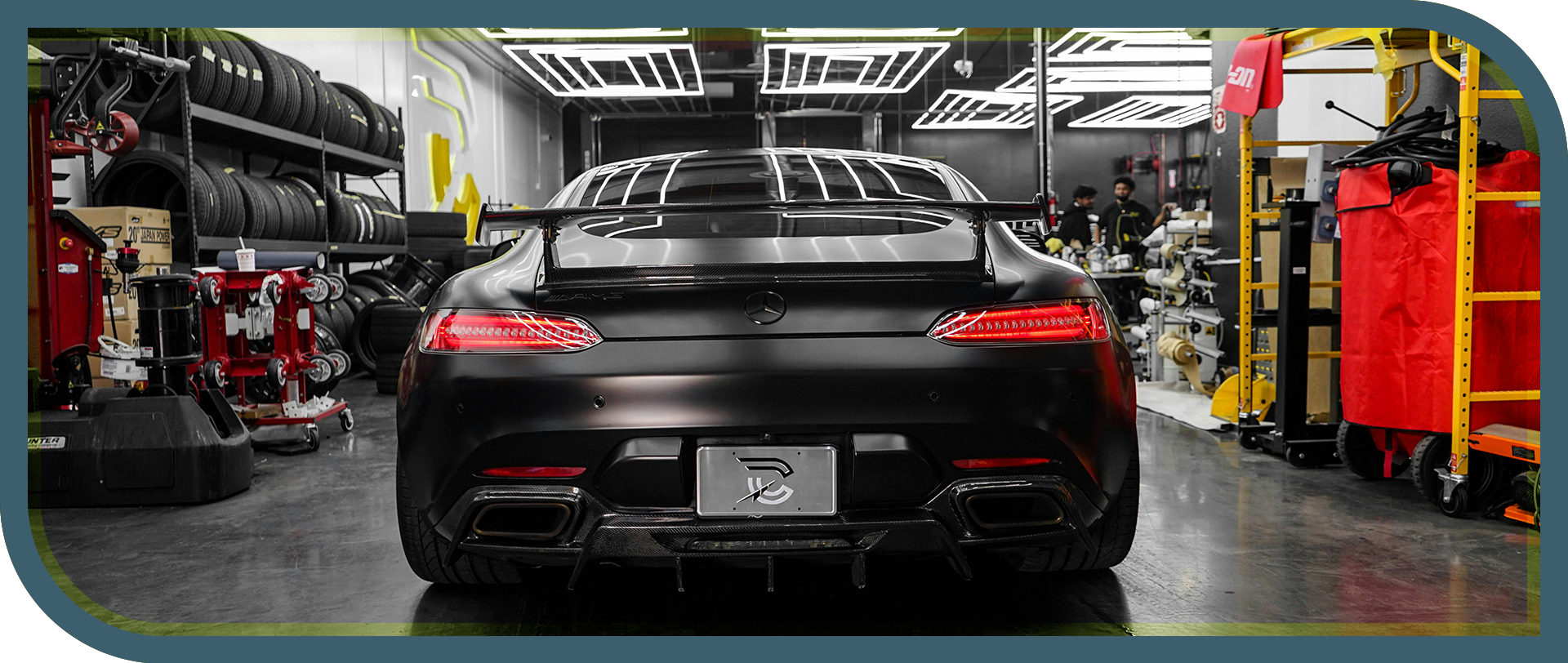
Vehicle sales are prominent, but customer lifetime value hinges on the service department. Regular service customers generate predictable revenue, are more likely to repurchase, and accept upsells/offers. However, dealerships often lose customers not from dissatisfaction, but through inaction: missed services, forgotten bookings, and communication gaps. This silent churn sees customers drift away without complaint.
What Research Tells Us About Staying in Touch
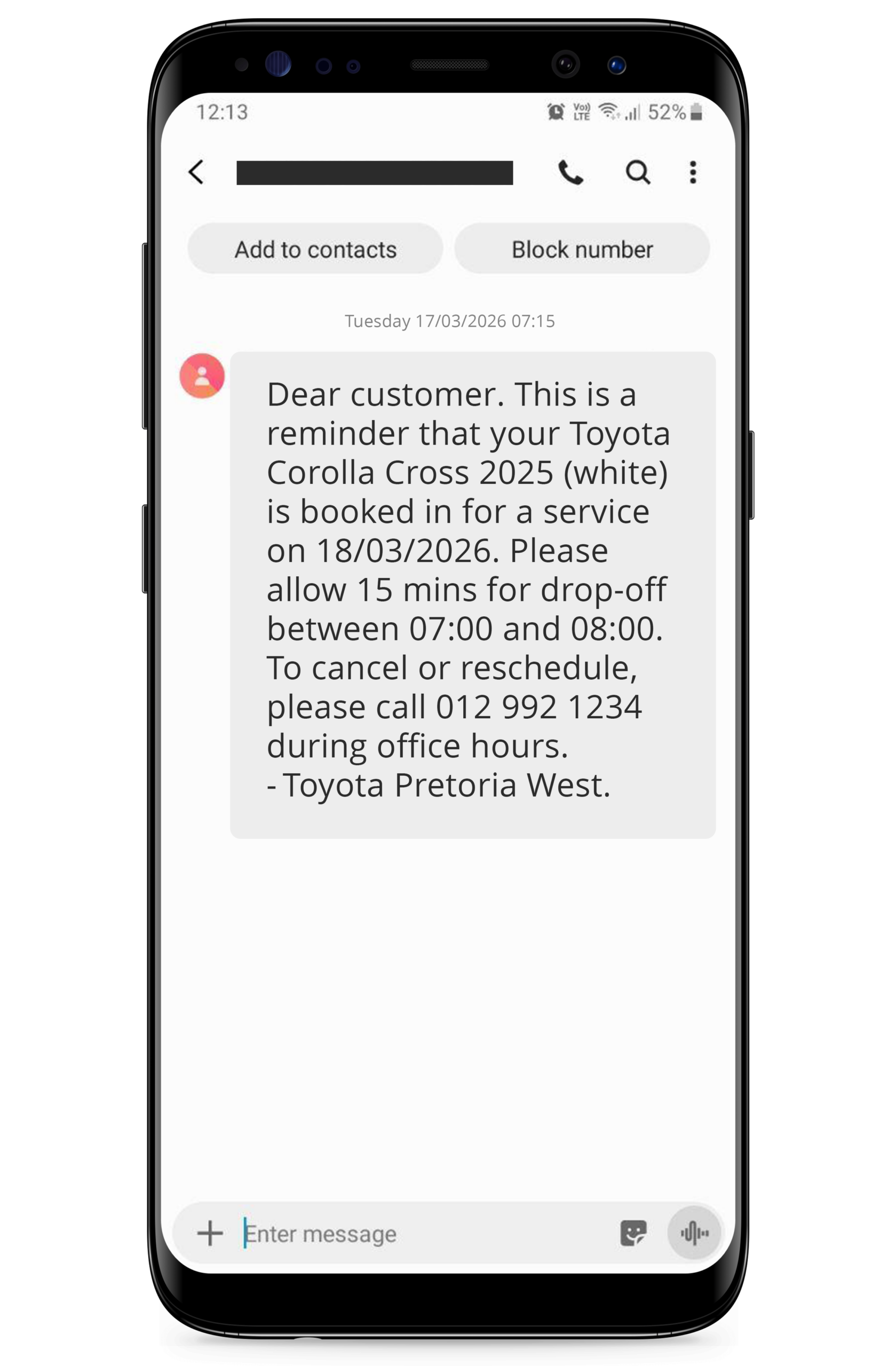
Research across industries shows that timely communication improves customer follow-through. Specifically, studies, primarily in healthcare, demonstrate that SMS reminders significantly reduce missed appointments and increase attendance [2][3][4], with absolute reductions in non-attendance ranging from approximately 5% to over 20% [2].
This mechanism, reducing forgetfulness and prompting action, directly applies to automotive servicing.
Why Reminders Work
Reminders consistently prove to be highly effective customer communication, demonstrating a strong behavioral impact. Studies show:
- SMS reminders reduce no-shows.
- Attendance significantly improves, often 10–30% over baseline [2].
- Reminders outperform passive approaches.
Recipients generally accept reminders, especially when linked to a real service. For dealerships, this means:
- A missed service risks losing the customer for good.
- Delayed servicing disrupts return habits.
- Simple reminders protect revenue and the customer relationship.
Why Mobile Channels Matter More Than Email for Service Communication
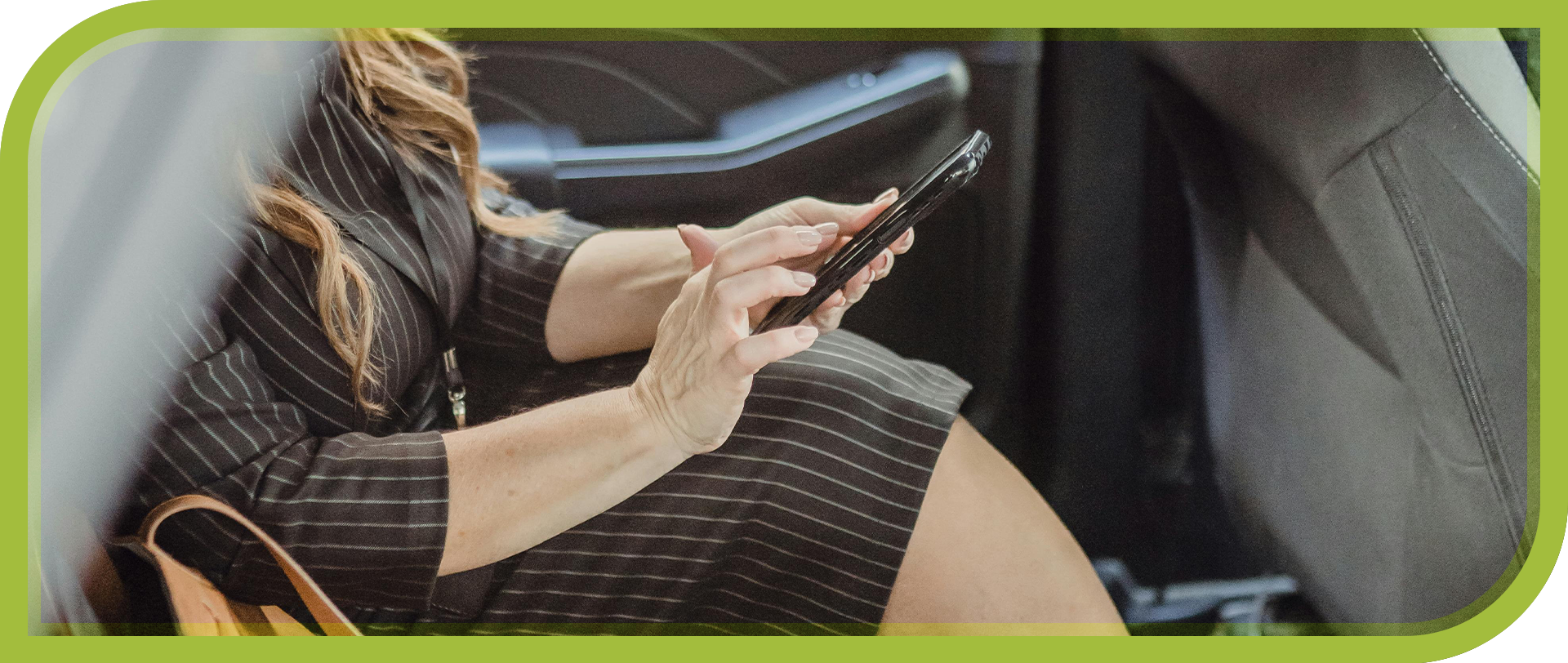
While email remains crucial for detailed information (invoices, reports), mobile channels are superior for time-sensitive service communication. Mobile messaging delivers far better metrics:
- WhatsApp open rates are about 98% vs. 20% for email [5]
- SMS messages are typically read within minutes [6]
- Mobile messaging delivers higher response rates for action-oriented communication than email [6]
The customer’s phone is the primary service inbox; mobile channels are simply more effective when speed and visibility are required for reminders, approvals, and status updates.
The Real Risk Is Not Over-Communication – It’s Silence
Concerns about over-messaging are well founded. Poorly targeted or excessive communication can lead to opt-outs and disengagement. However, the greater and more common risk in service-based industries is under-communication. When customers receive no reminders, prompts, or follow-up, attendance drops and engagement weakens, a pattern consistently observed across reminder studies [2][3][4]. In automotive terms:
No reminders → missed services → weakened habit → customer drift
Silence introduces its own form of churn risk.
Where Messaging Can Undermine Retention
Messaging can damage customer retention when it is excessive, repetitive, or irrelevant. Research shows 70% of consumers unsubscribe from a brand within three months due to receiving too many messages [7]. Furthermore, over 56% will unsubscribe if they receive four or more messages within 30 days, with many opting out even sooner due to overload [8].
This highlights that poorly calibrated messaging actively accelerates disengagement. Retention relies on relevance and timing, not message volume. Successful dealerships focus on:
- Triggered, lifecycle-based messages
- Clear frequency boundaries
- Respect for customer preferences and consent
Cadence Matters – But Relevance Matters More

The ideal communication frequency for dealerships is secondary to relevance. Effective strategies prioritise continuity, not noise, and focus on:
- Triggered reminders (service, bookings, follow-ups)
- Low-frequency (monthly/bi-monthly) relationship maintenance.
Communication as Part of the Ownership Experience
The most effective dealerships no longer treat messaging as a marketing channel. They treat it as part of the ownership experience. When communication is framed as per below it reinforces trust rather than eroding it.
- “We’re helping you look after your vehicle”
- “We’re reminding you so you don’t have to remember”
- “We’re keeping you informed”
The Strategic Takeaway for Dealership Leadership
Automotive churn is high, with over half of buyers not returning and many service customers drifting away. Retention is critical, and evidence shows that mobile-first communication, such as SMS reminders, significantly reduces missed appointments and disengagement, while silence or under-communication accelerates loss.
For dealership leadership, communication is not a support function, but a deliberate retention strategy. Dealerships that systemise lifecycle communication and reminders protect relationships, which drives long-term profitability.
To find out how Connect Mobile’s mobile communication solutions can benefit your dealership, strengthen your retention strategy, and enhance your overall communication reach, contact our team today. Email sales@connect-mobile.co.za or call 012 991 4328.
References
[1] Demand Local. Customer Retention in the Automotive Industry: Key Statistics.
https://www.demandlocal.com/blog/customer-retention-dealerships-statistics/
[2] Schwebel FJ et al. Text messaging reminders improve appointment attendance and medical compliance: a systematic review.
https://pmc.ncbi.nlm.nih.gov/articles/PMC6112101/
[3] Lin CL et al. Text message reminders significantly lower no-show rates: a randomized controlled trial.
https://pmc.ncbi.nlm.nih.gov/articles/PMC5227159/
[4] Koshy E et al. Effectiveness of SMS reminders in reducing non-attendance.
https://pmc.ncbi.nlm.nih.gov/articles/PMC2438329/
[5] WhatsApp Business. Using WhatsApp to Achieve Your Business Goals.
https://business.whatsapp.com/blog/use-whatsapp-business-goals
[6] Keybe AI. SMS vs Other Channels: Recent Engagement Statistics.
https://keybe.ai/articles/sales/sms-vs-other-channels-recent-engagement-statistics/
[7] Optimove. Marketing Fatigue: How Over-Messaging Drives Unsubscribes.
https://www.optimove.com/blog/marketing-fatigue-insights
[8] EMARKETER. Consumers Overwhelmed by Brand Emails and Texts.
https://www.emarketer.com/content/us-consumers-overwhelmed-by-brand-emails-texts
[9] SciELO South Africa. Customer relationship management and retention in the South African motor industry.
https://www.scielo.org.za/scielo.php?pid=S1815-74402010000100010&script=sci_arttext